Polish conversation classes for foreigners – why is it worth practicing with a teacher?
29 October 2026
miracle, wonder
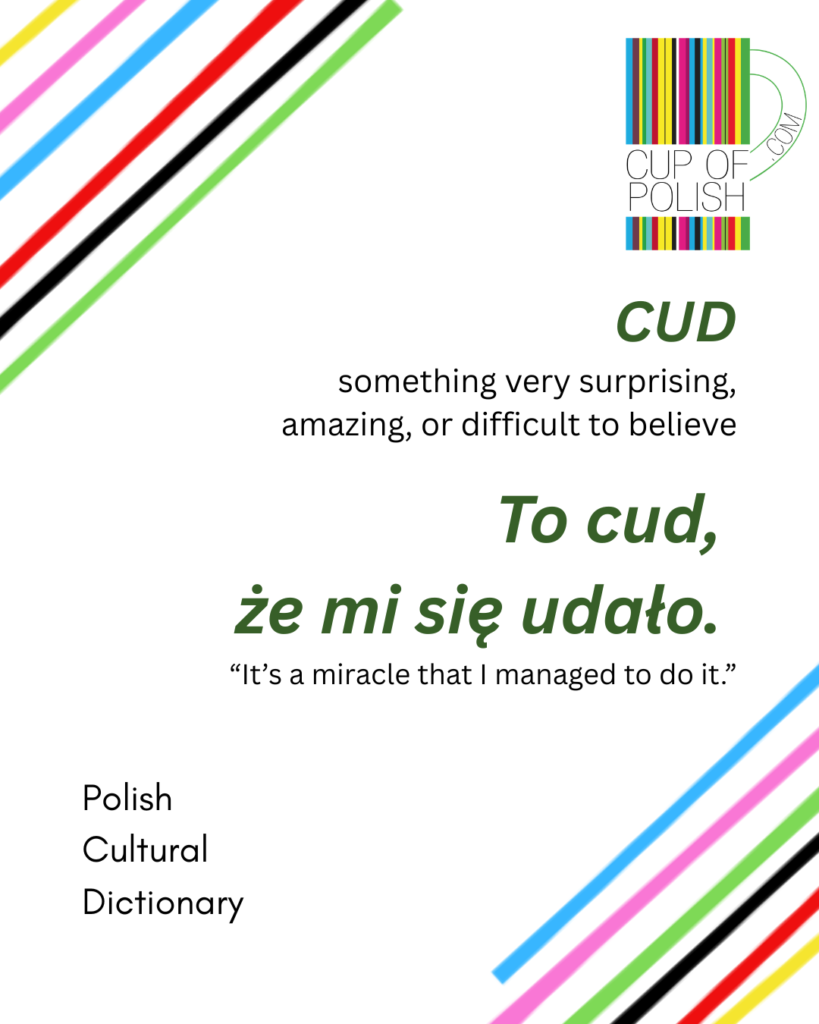
We use the word cud to describe something very surprising, amazing, or difficult to believe. Here are some ways you can use cud and related words in everyday Polish:
To cud, że mi się udało. (“It’s a miracle that I managed to do it.”)
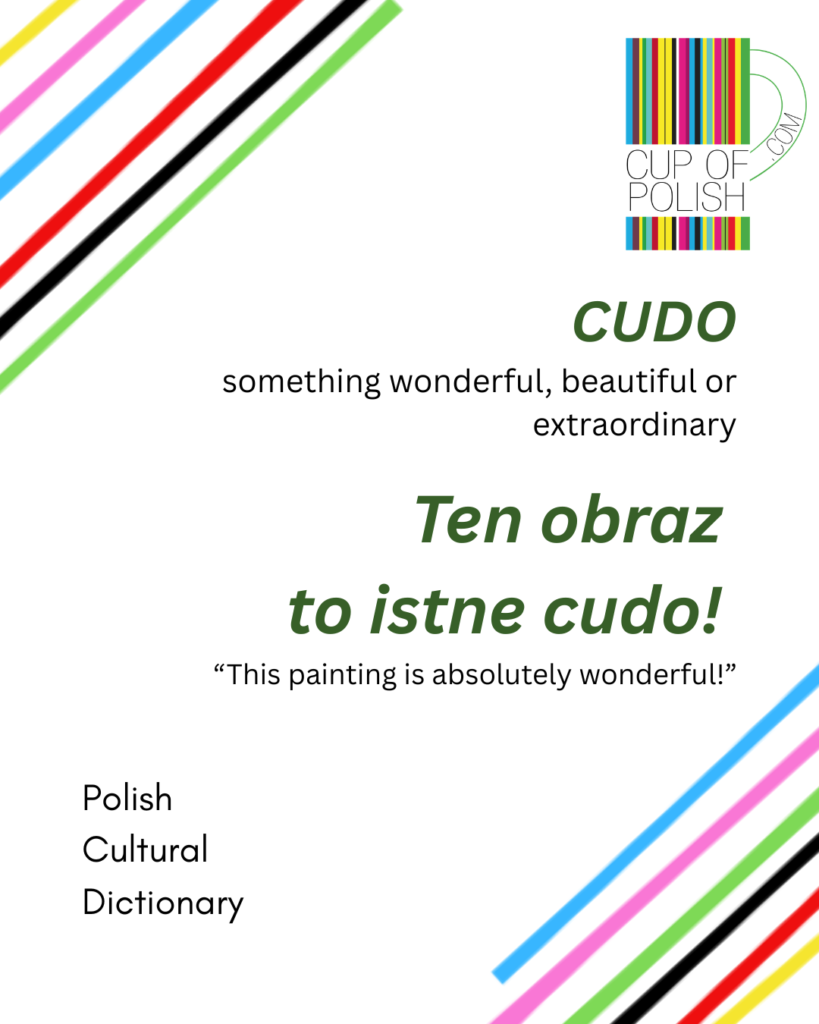
You can also use another, similar word: cudo. You can think of it this way: cud means a miracle or something unbelievable, while cudo usually refers to something wonderful, extraordinary, or beautiful.
Ten obraz to istne cudo! (“This painting is absolutely wonderful!”)
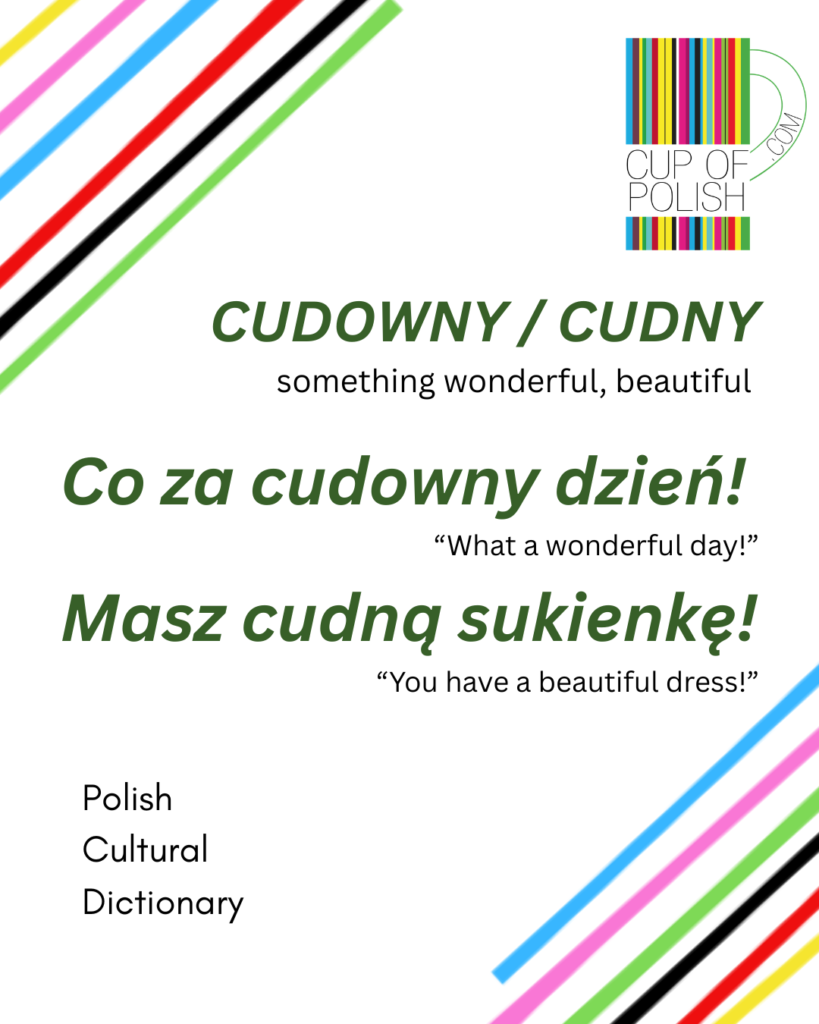
If you want to describe something as wonderful or beautiful, you can use the adjectives cudowny or cudny:
Co za cudowny dzień! (“What a wonderful day!”)
Masz cudną sukienkę! (“You have a beautiful dress!”)
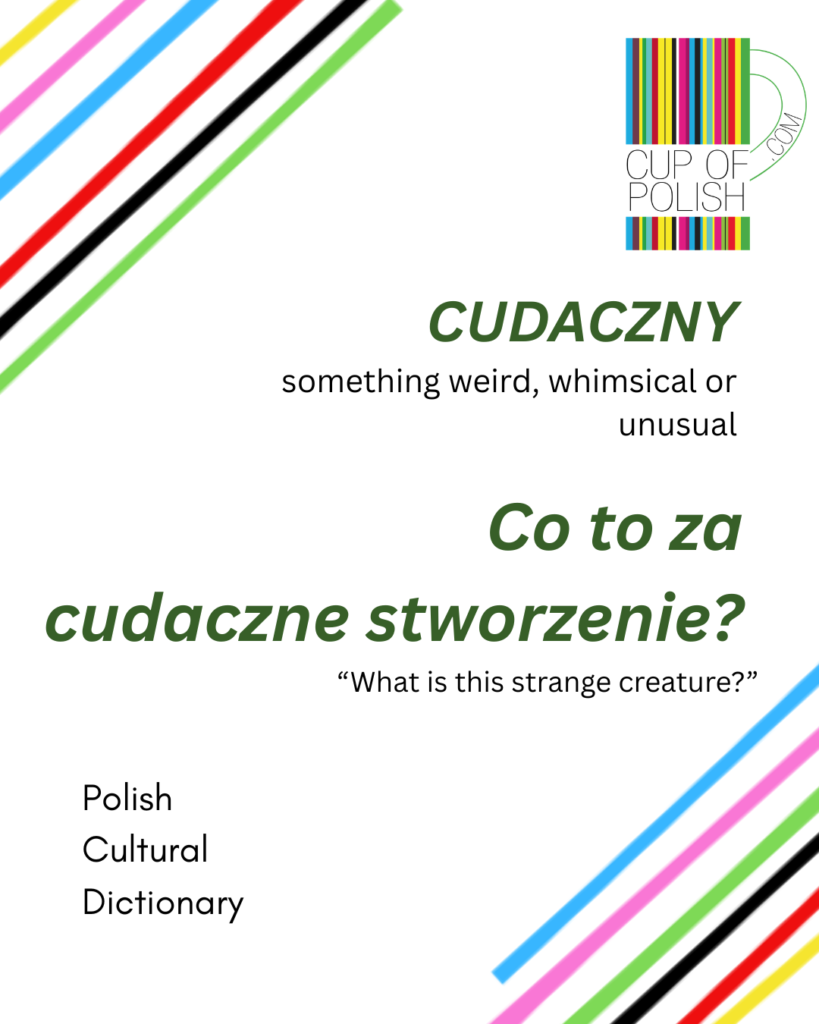
Another adjective connected with cud is cudaczny, which has a slightly different meaning. It can be used to describe something weird, whimsical, or unusual:
Co to za cudaczne stworzenie? (“What is this strange creature?”)
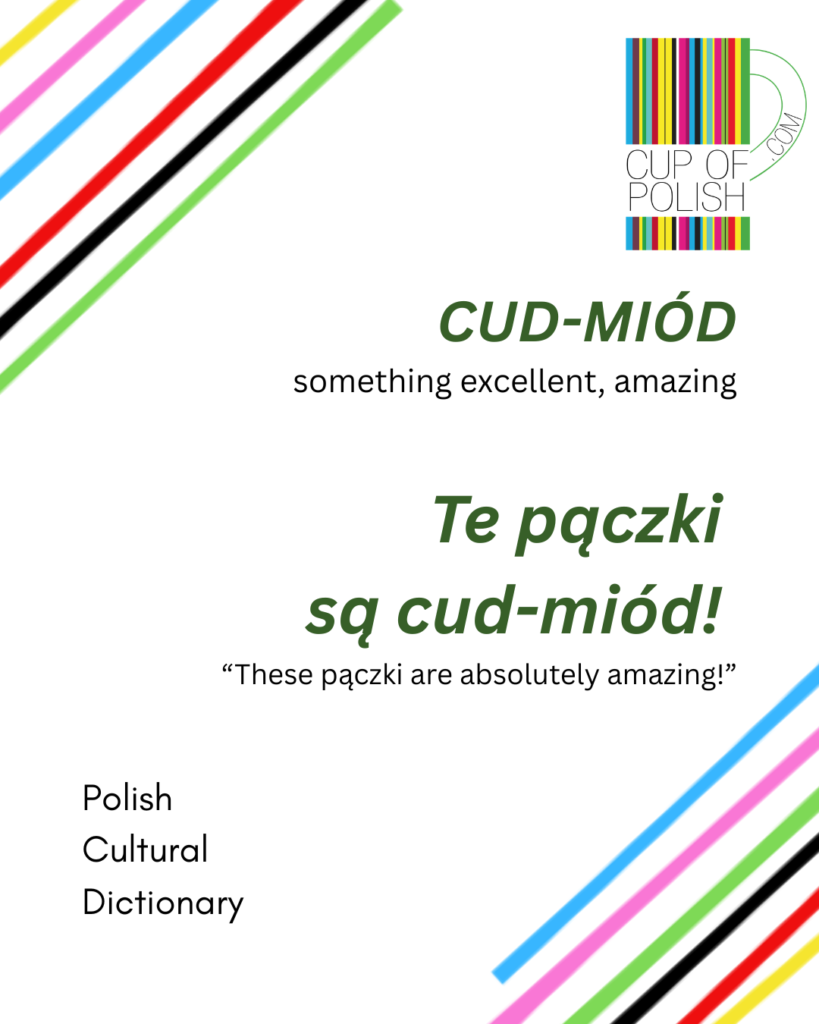
Another way to describe something as excellent or amazing is the informal expression cud-miód:
Te pączki są cud-miód! (These pączki are absolutely amazing!)
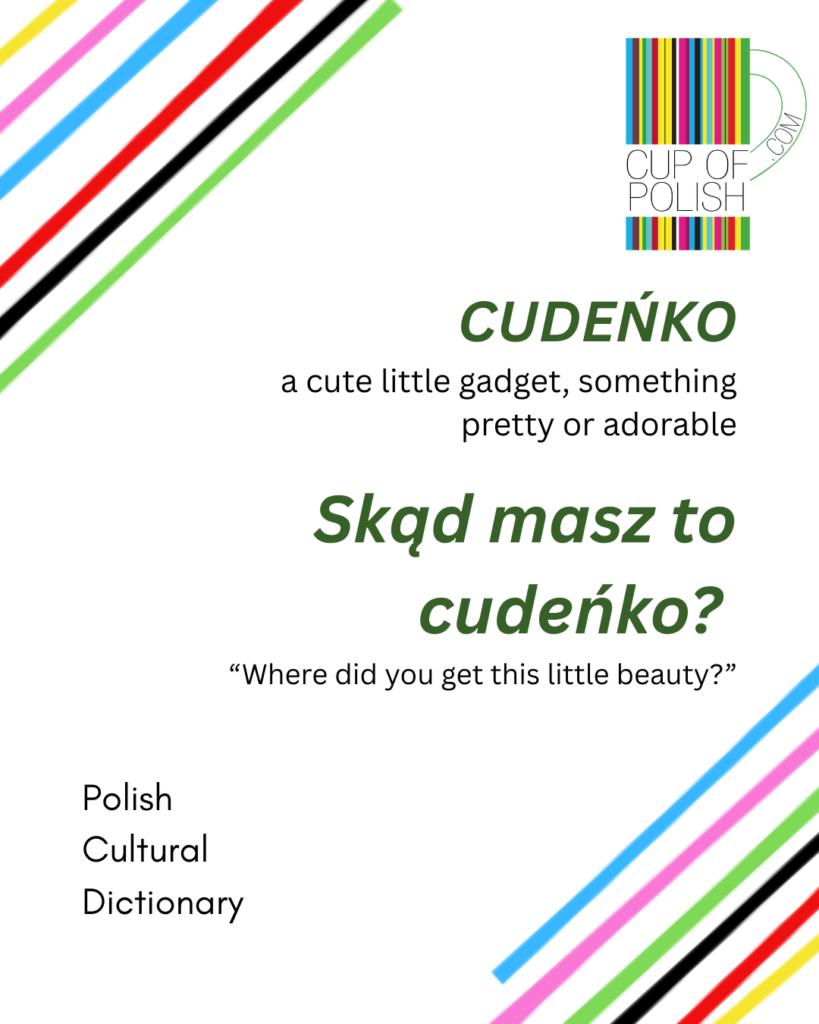
Poles also use the diminutive of cudo – cudeńko. It’s usually used to describe a cute little gadget or something adorable.
Skąd masz to cudeńko? (“Where did you get this little beauty?”)
Calling somebody a cudak is equivalent to calling them a weirdo, but it’s rarely meant maliciously. It’s usually used to describe an odd-looking or strangely behaving person who sparks surprise or amusement in others.
Niezły z niego cudak, co? (“He’s quite a weirdo, isn’t he?)
The idiom cuda wianki is used colloquially to describe all sorts of strange, complicated, or unnecessary things. It can also be used ironically, when talking about something unrealistic, made up:
Znowu wymyślasz jakieś cuda wianki. (“You’re making up all sorts of nonsense again.”)
And last but not least! One particularly important historical event for Poles is often referred to as Cud nad Wisłą (the Miracle on the Vistula). It refers to the Polish victory in the Battle of Warsaw in August 1920, during the Polish-Soviet War.