Polish language courses for businesses – is it worth investing in employee training?
28 May 2026
Jak zacząć naukę języka polskiego od zera?
23 June 2026
If we had to give the Polish cases simple meanings, the genitive case would be the case of ownership, belonging, and absence.
We use the genitive to show who something belongs to. It helps us talk about possessions, family connections, relationships between people, and even the author or creator of something.
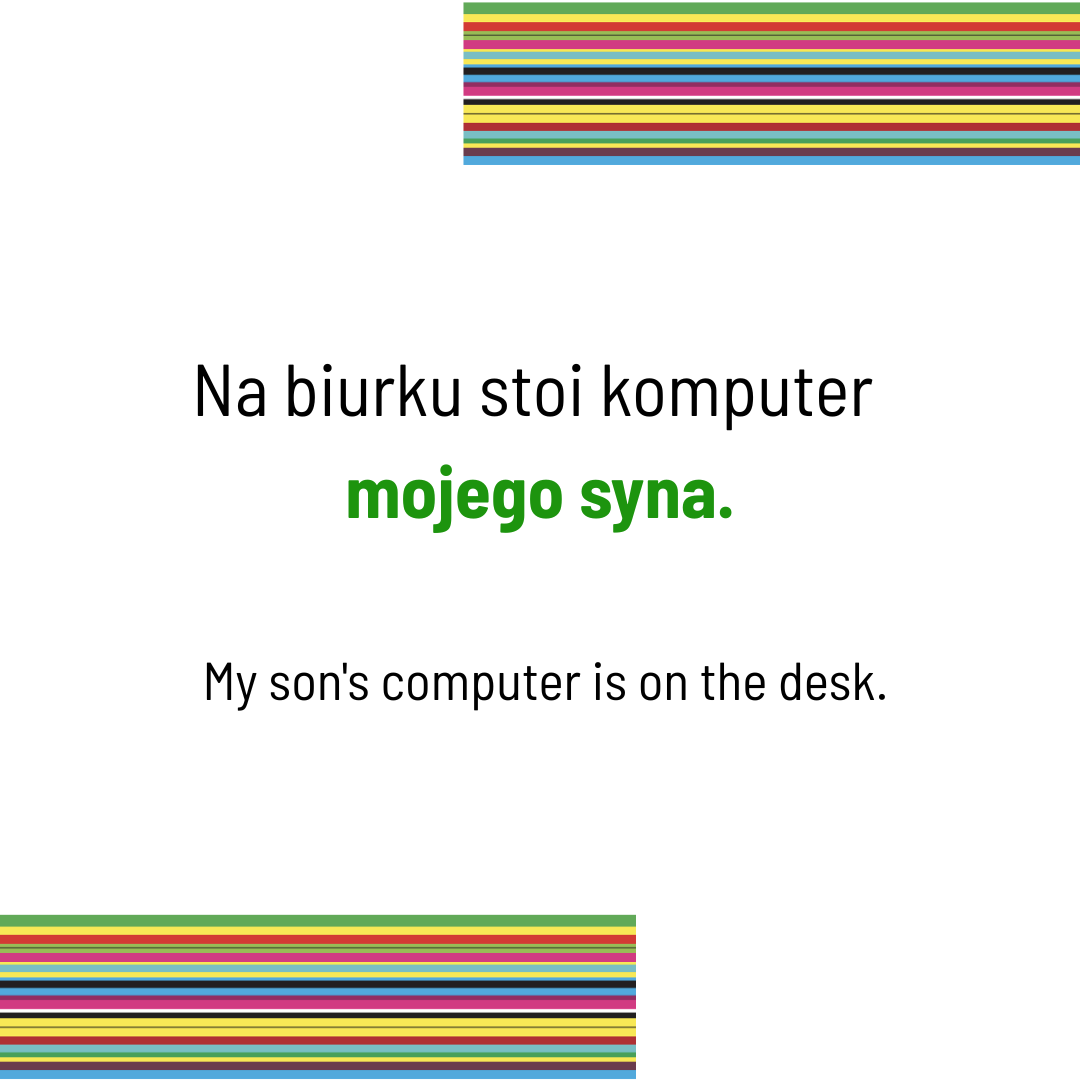
Na biurku stoi komputer mojego syna.
My son’s computer is on the desk.
Widziałem nowy samochód mojej koleżanki.
I saw my colleague’s new car.
Poznałam przyjaciela mojego męża.
I met my husband’s friend.
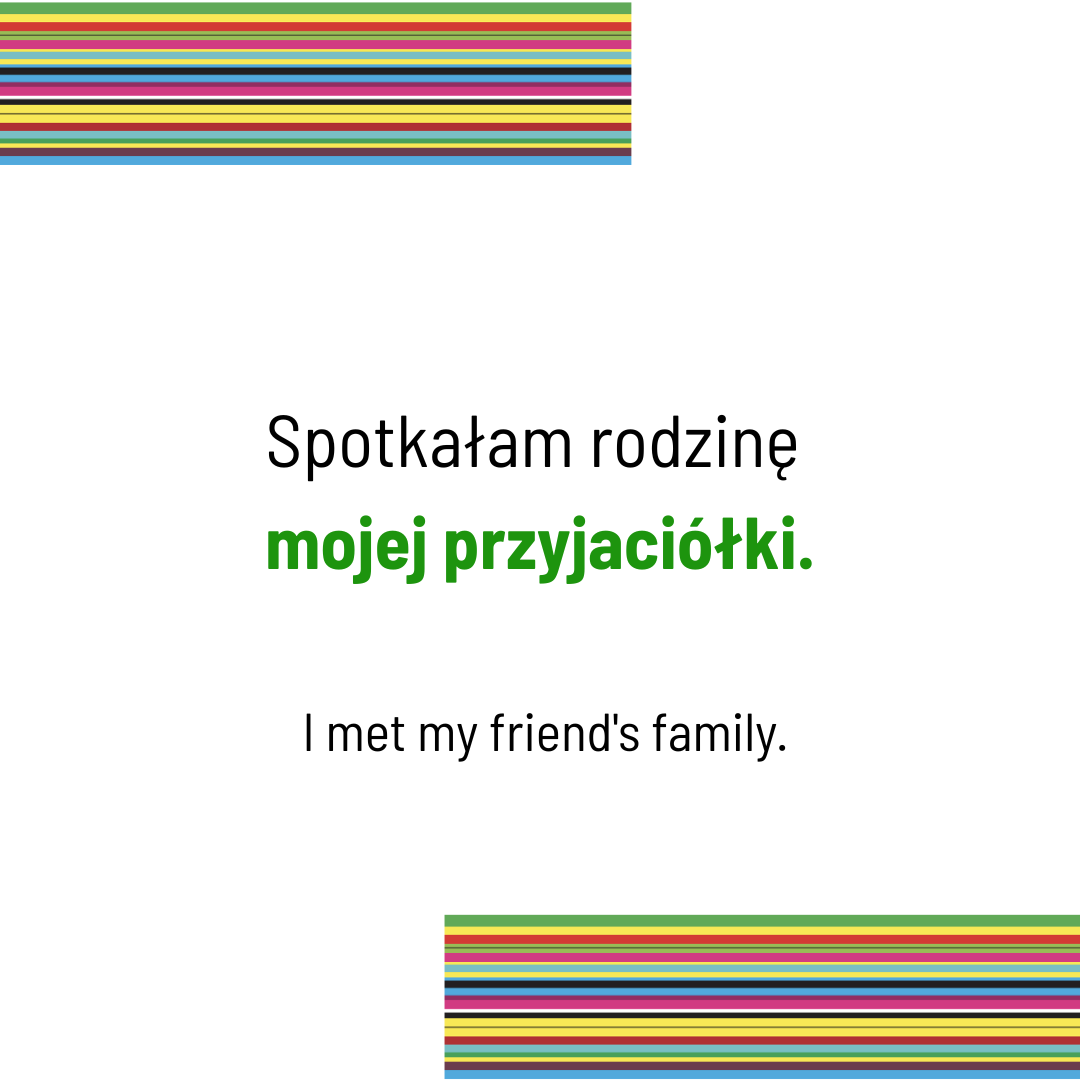
Spotkałam rodzinę mojej przyjaciółki.
I met my friend’s family.
Zadzwonił do mnie konsultant znanej firmy.
A consultant from a well-known company called me.
Oglądam webinar znanego profesora.
I’m watching a webinar by a well-known professor.
Słucham koncertu Fryderyka Chopina.
I’m listening to a concert by Fryderyk Chopin.
The genitive is also used when something is part of a bigger whole. You’ll often see it after words that describe quantities, measurements, food, drinks, or percentages.
Poproszę kawałek ciasta czekoladowego.
I’d like a piece of chocolate cake.
Potrzebuję kilograma świeżych truskawek.
I need a kilogram of fresh strawberries.
Dodaj dwie łyżeczki cukru!
Add two teaspoons of sugar!
Chciałabym wziąć butelkę wody gazowanej.
I’d like a bottle of sparkling water.
Mieszkanie kosztuje dwa tysiące złotych.
The apartment costs two thousand zlotys.
30 % studentów nie zdaje egzaminów.
Thirty percent of students fail their exams.

Dużo Polaków ma kredyty.
Many Poles have loans.
Another important use of the genitive is talking about things that are missing, unavailable, or needed.
Dzisiaj nie ma mojej nauczycielki.
My teacher isn’t here today.
Nie widziałam dzisiaj mojego studenta.
I didn’t see my student today.
Nie oglądałem tego filmu.
I didn’t watch this film.
Nie przeczytam tej książki.
I won’t read this book.
Nie mam dzisiaj swojego komputera.
I don’t have my computer with me today.
Brakuje mi wolnego czasu.
I don’t have enough free time.
Potrzebuję twojej pomocy.
I need your help.
A good rule to remember is this: ownership, parts of a whole, and negation often need the genitive case.
The genitive also has a special relationship with the accusative case. In positive sentences, we often use the accusative. But when we make the sentence negative, the accusative frequently changes into the genitive. This is one of the patterns you’ll see again and again in Polish.