How to master Polish inflection – cases, endings and pitfalls
11 December 2025
Motivation in language learning – how to keep it up over time?
25 December 2025
There is a strange category in the Polish language that keeps not only foreigners learning Polish as a foreign language and people of Polish descent learning Polish as a heritage language awake at night, but even those of us for whom Polish is a native language — the language of education, including academic education.
Recently, this category turned out to be one of the most intriguing discoveries of our classes and opened the door for our students to completely new worlds and ways of thinking 😊
Grammar, but make it existential.
So… which category am I talking about?
Exactly.
Today’s star of the show is masculine animacy (męskożywotność)!!!!
Sounds strange? Perfect. That means it’s working.
The easiest explanation of which masculine nouns get the label “animate” in descriptive Polish grammar is this: animals. Living beings. Creatures with hearts, lungs, and a strong opinion about dinner time. These nouns take the accusative singular endings -ego / -a, just like masculine personal nouns.
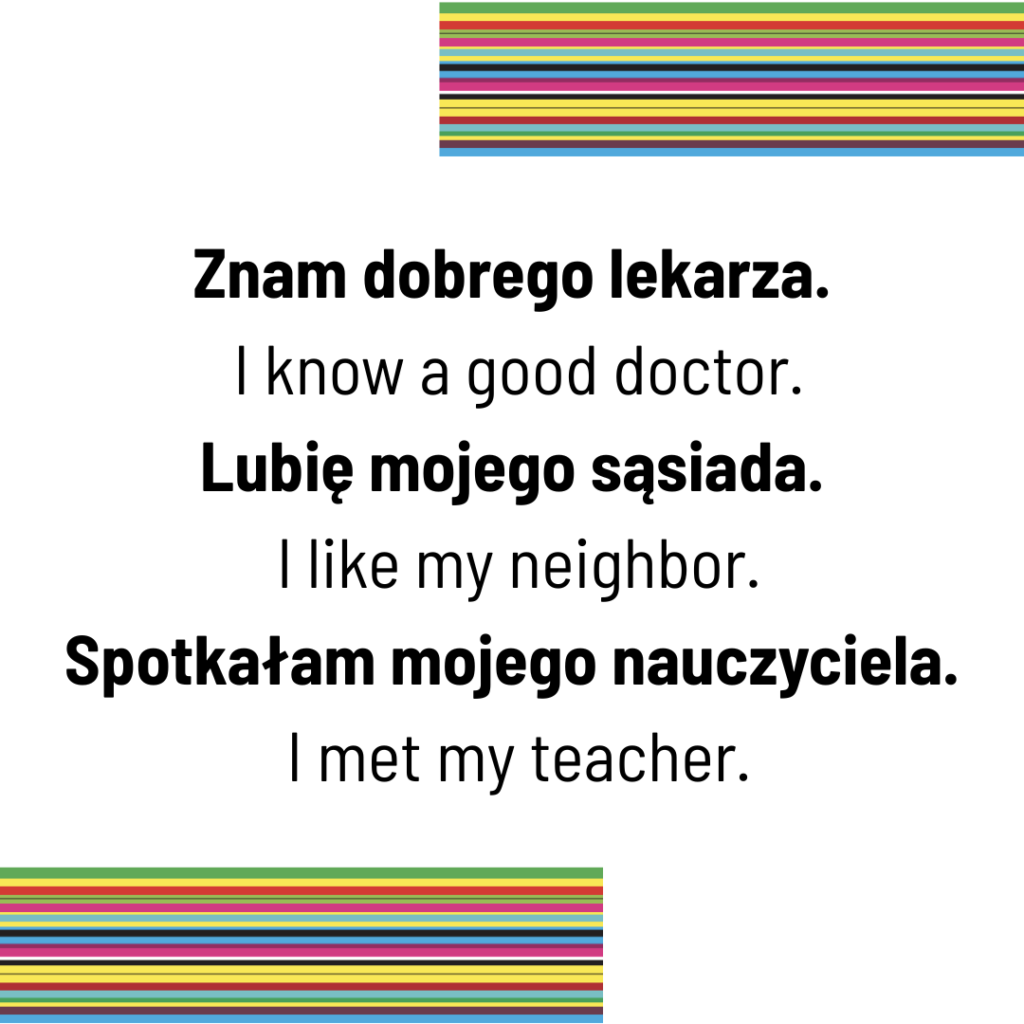
Znam dobrego lekarza.
I know a good doctor.
Lubię mojego sąsiada.
I like my neighbor.
Spotkałam mojego nauczyciela.
I met my teacher.
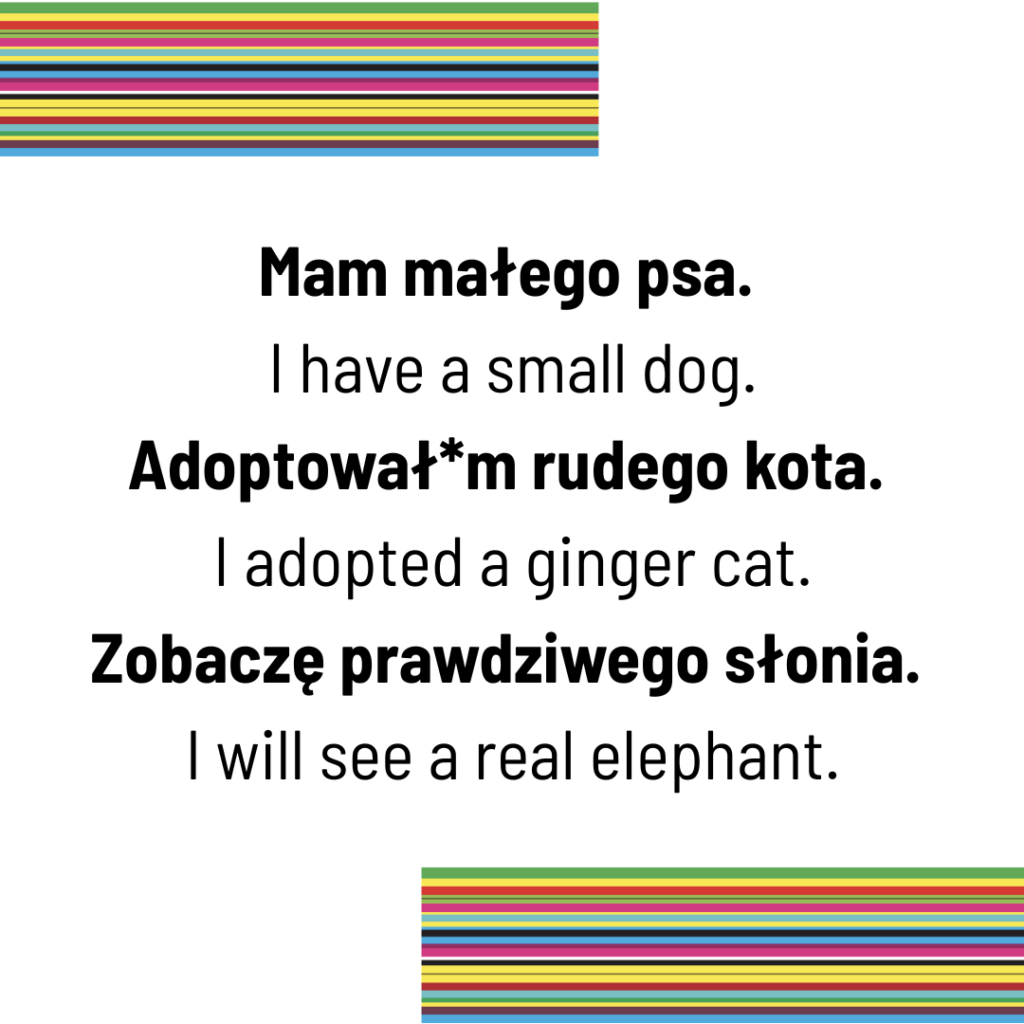
Mam małego psa.
I have a small dog.
Adoptował*m rudego kota.
I adopted a ginger cat.
Zobaczę prawdziwego słonia.
I will see a real elephant.
So far, so good.
But then Polish grammar does what it does best: it surprises us. Suddenly, all kinds of unexpected guests sneak into this exclusive -ego / -a club — groups that, even with a lot of imagination and good intentions, are very hard to call “alive.”
From various popular grammar sources, I’ve collected the most curious of these groups for you:
Fairy-tale and fantastical masculine animate
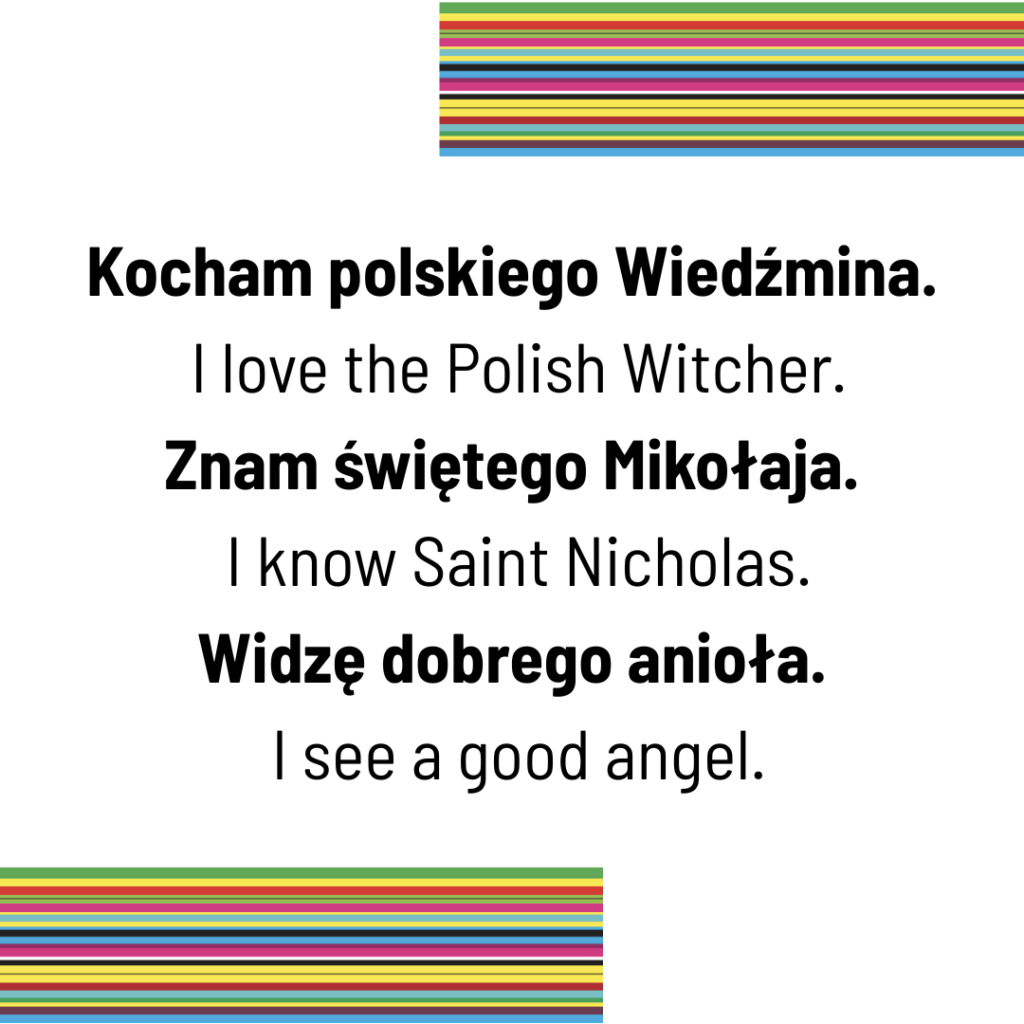
Fairy-tale creatures, imaginary heroes, and supernatural beings — because grammar also believes in magic.
Kocham polskiego Wiedźmina.
I love the Polish Witcher.
Znam świętego Mikołaja.
I know Saint Nicholas.
Widzę dobrego anioła.
I see a good angel.
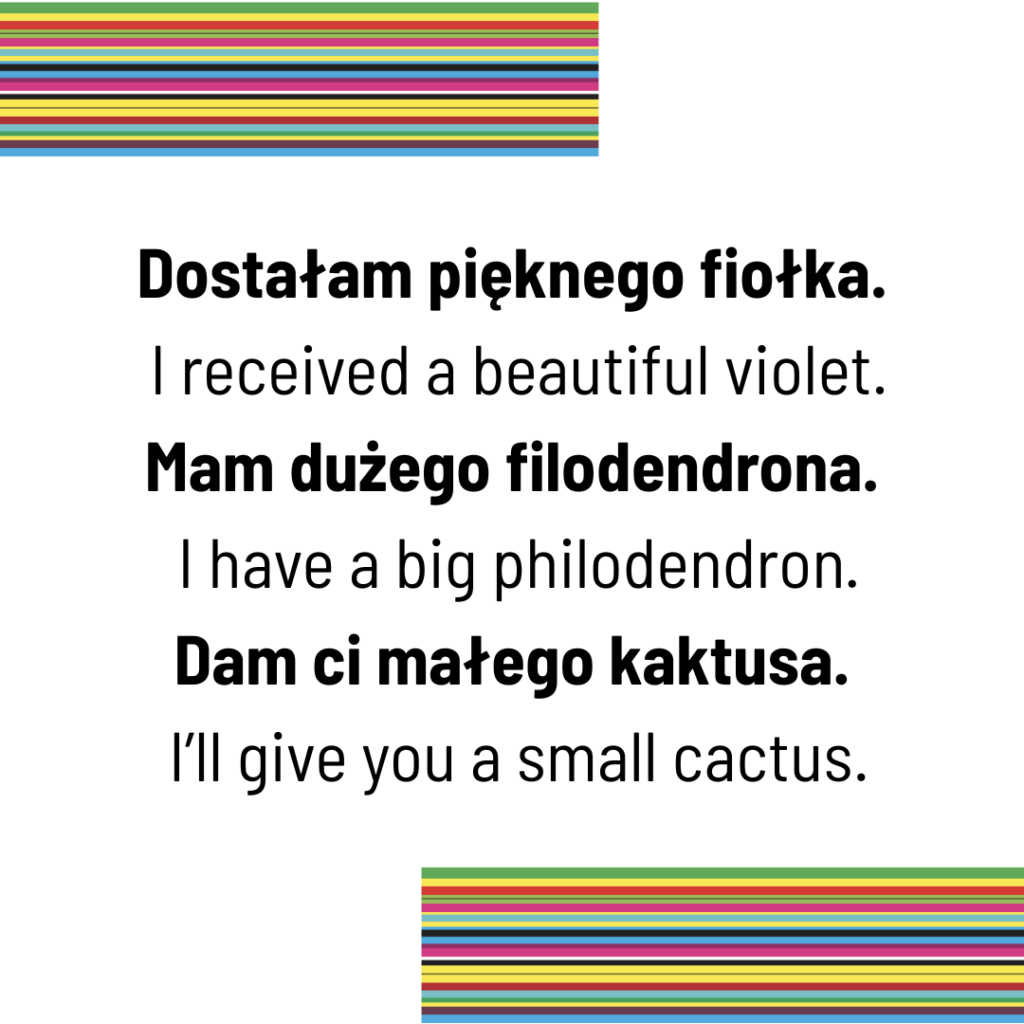
Plant-related masculine animate
Botanical species in the masculine gender — for grammar nerds and plant parents alike.
Dostałam pięknego fiołka.
I received a beautiful violet.
Mam dużego filodendrona.
I have a big philodendron.
Dam ci małego kaktusa.
I’ll give you a small cactus.
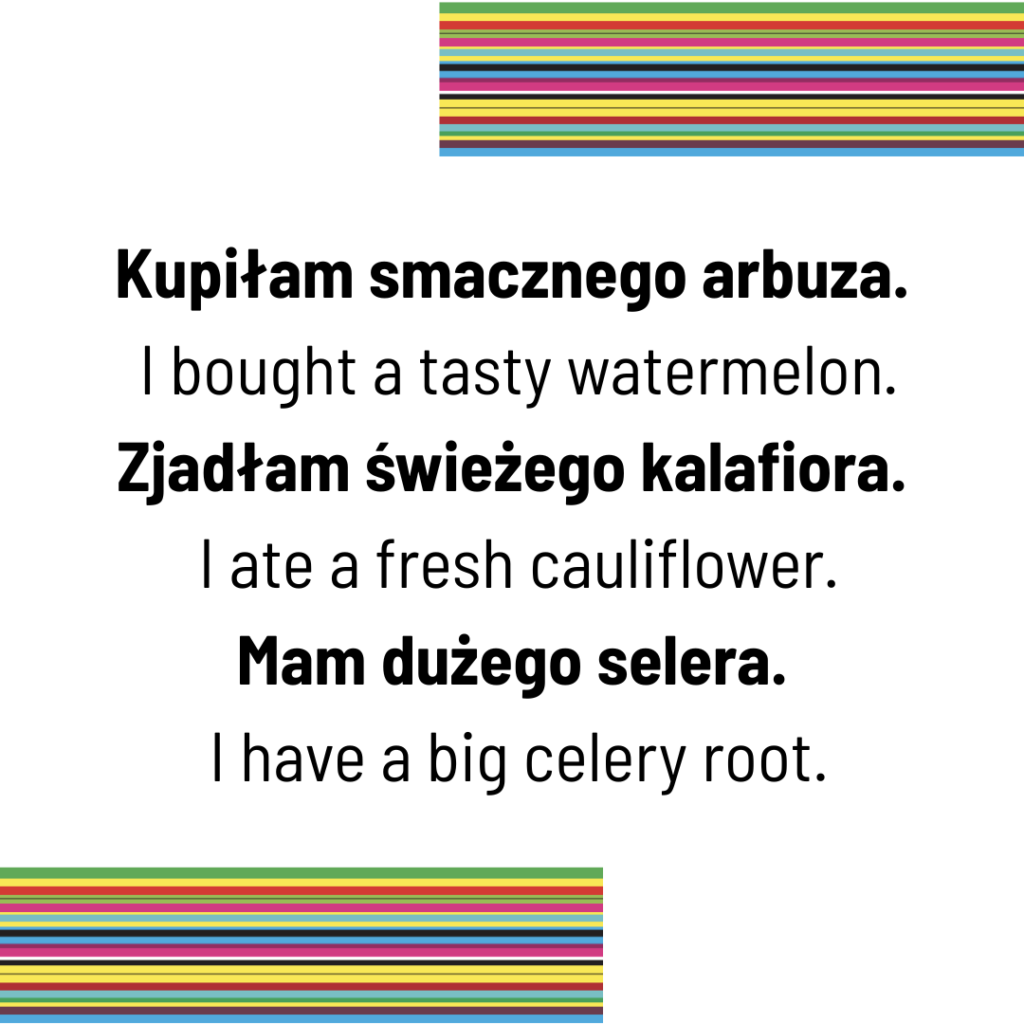
Vegetable and fruit masculine animate
Everything masculine from the greengrocer’s, the garden, and the field — apparently even vegetables have personalities.
Kupiłam smacznego arbuza.
I bought a tasty watermelon.
Zjadłam świeżego kalafiora.
I ate a fresh cauliflower.
Mam dużego selera.
I have a big celery root.
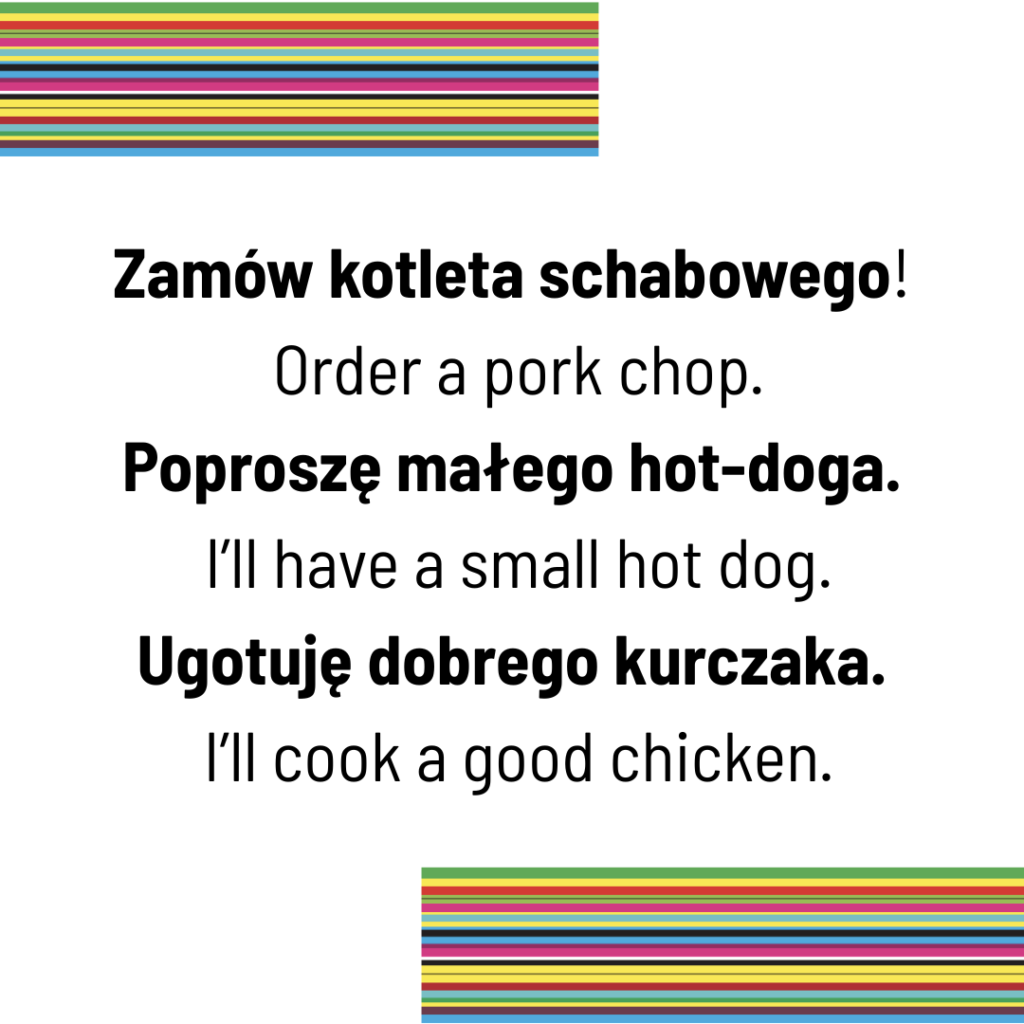
Food-related masculine animate
All the remaining masculine food items that land on our plates — though not all of them earn this privilege. Unlike kebab or hot dog, sos (sauce) and gulasz (stew) are apparently not “manly” enough for -ego / -a. Polish grammar has standards.
Zamów kotleta schabowego.
Order a pork chop.
Poproszę małego hot-doga.
I’ll have a small hot dog.
Ugotuję dobrego kurczaka.
I’ll cook a good chicken.
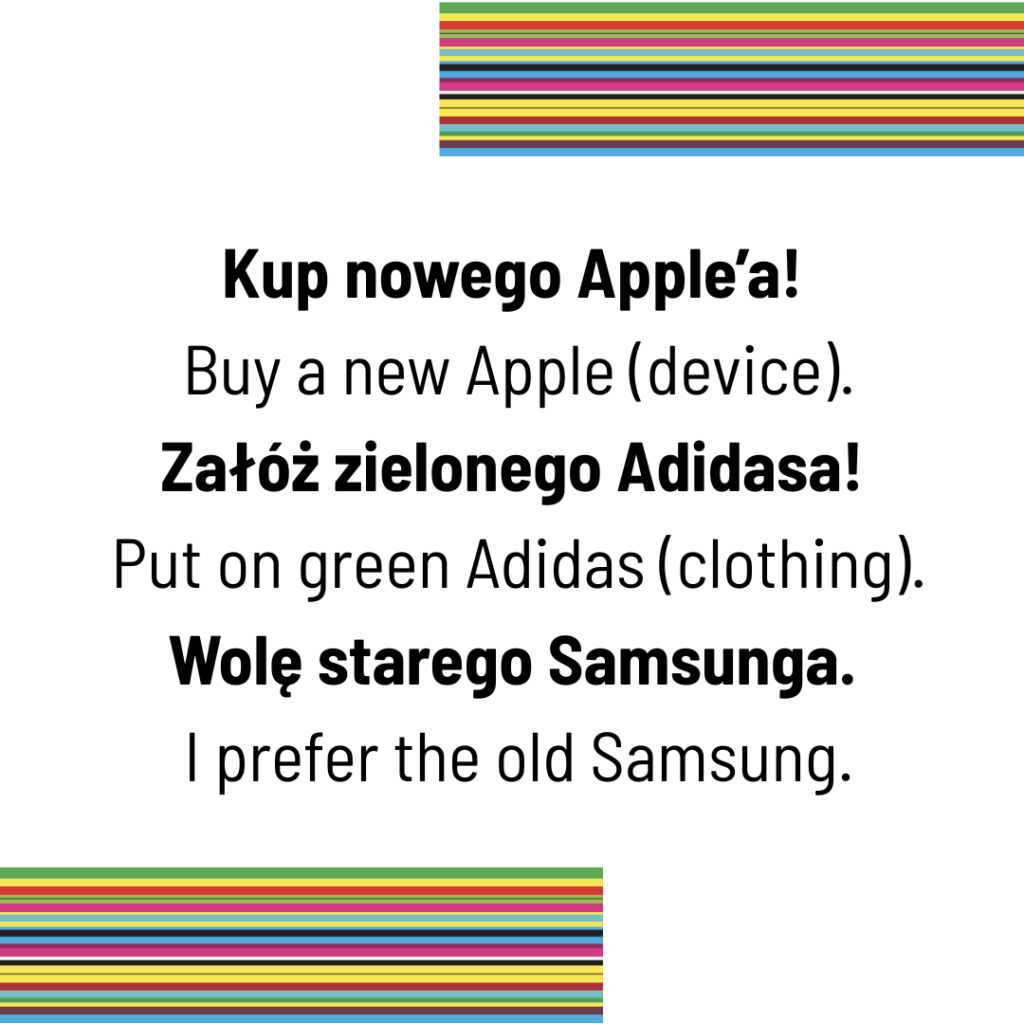
Brand-related masculine animate
A good brand is worth its weight in gold and immediately joins the elite banana-flavored group of the chosen ones.
Kup nowego Apple’a.
Buy a new Apple (device).
Załóż zielonego Adidasa.
Put on green Adidas (shoes/clothing).
Wolę starego Samsunga.
I prefer the old Samsung.
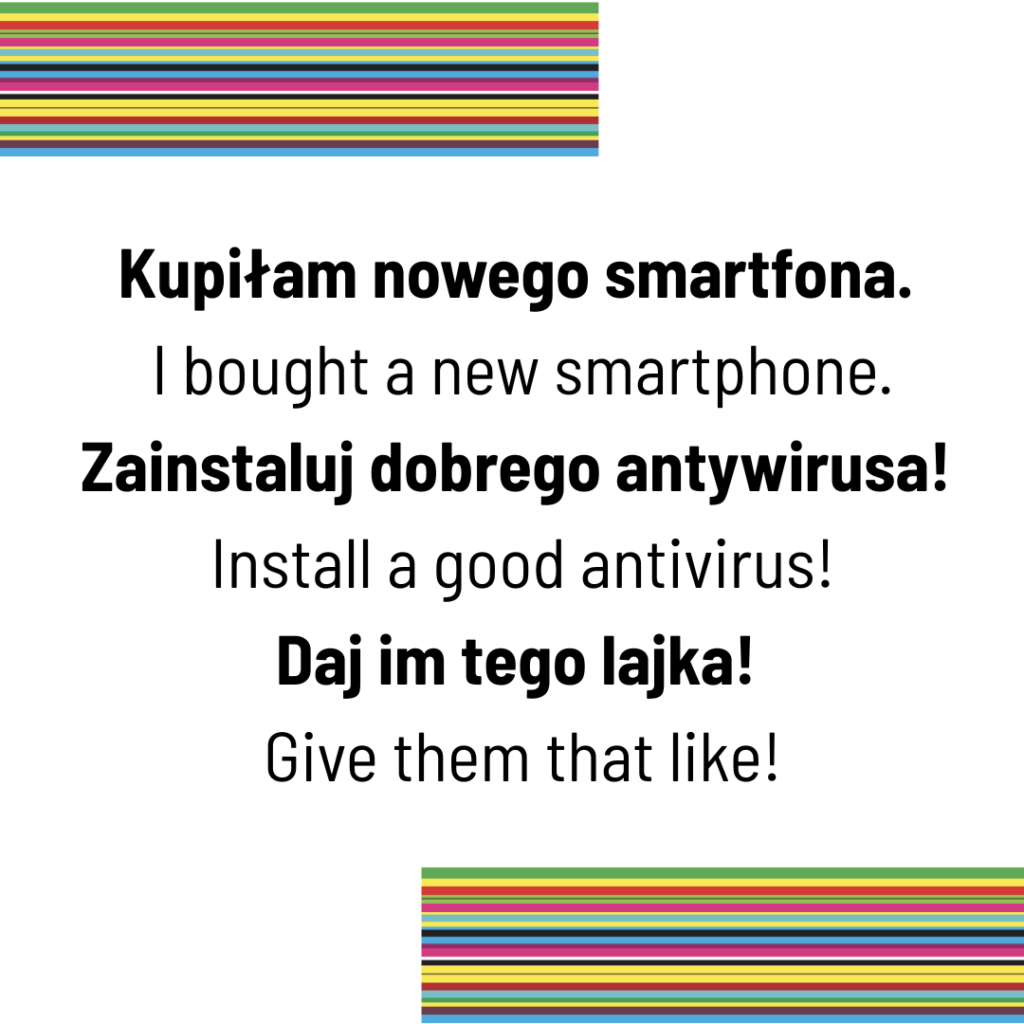
Technological masculine animate
Maybe modern devices are extensions of our hands and brains? Or maybe we just really like adding -ego / -a to English words.
Kupiłam nowego smartfona.
I bought a new smartphone.
Zainstaluj dobrego antywirusa!
Install a good antivirus!
Daj im tego lajka!
Give them that like!
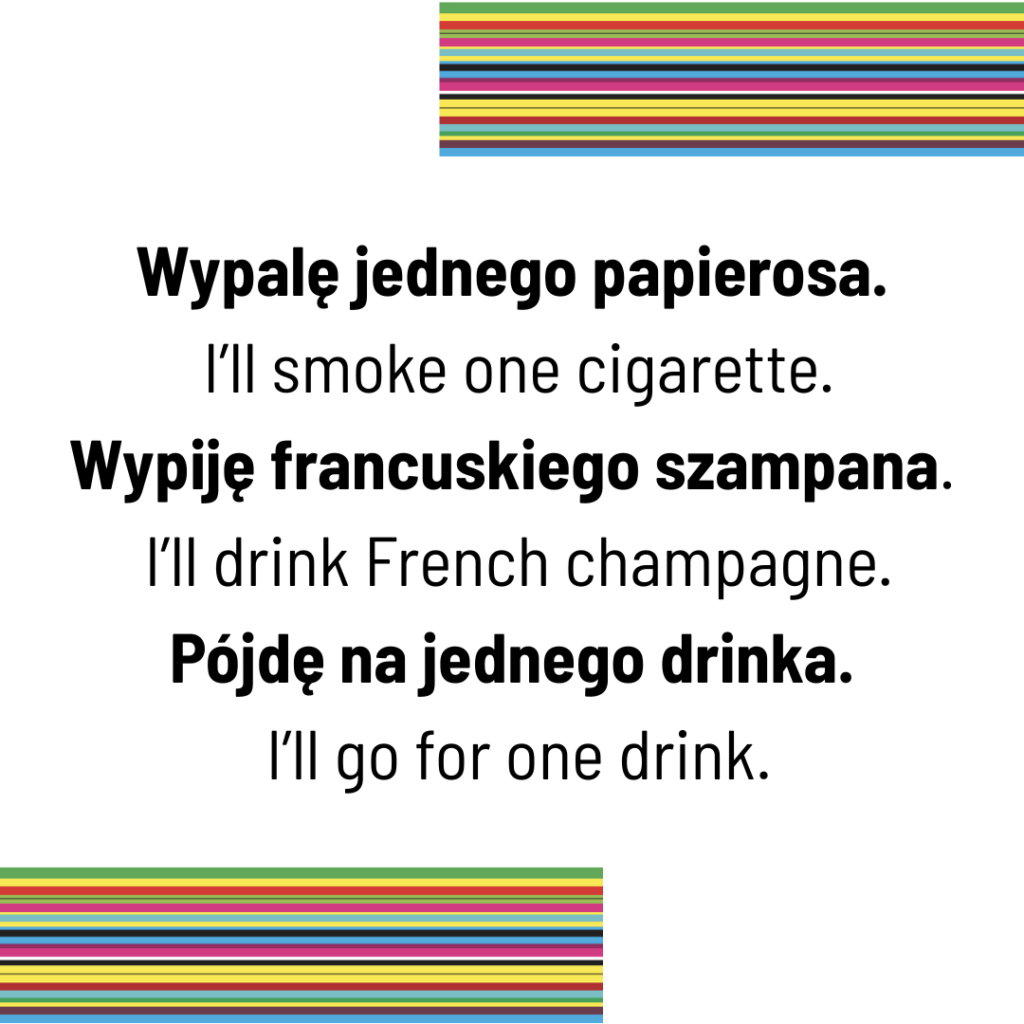
Stimulant-related masculine animate
To this day, I still don’t understand why I drink juice, but I drink champagne — with an -a.
Wypalę jednego papierosa.
I’ll smoke one cigarette.
Wypiję francuskiego szampana.
I’ll drink French champagne.
Pójdę na jednego drinka.
I’ll go for one drink.
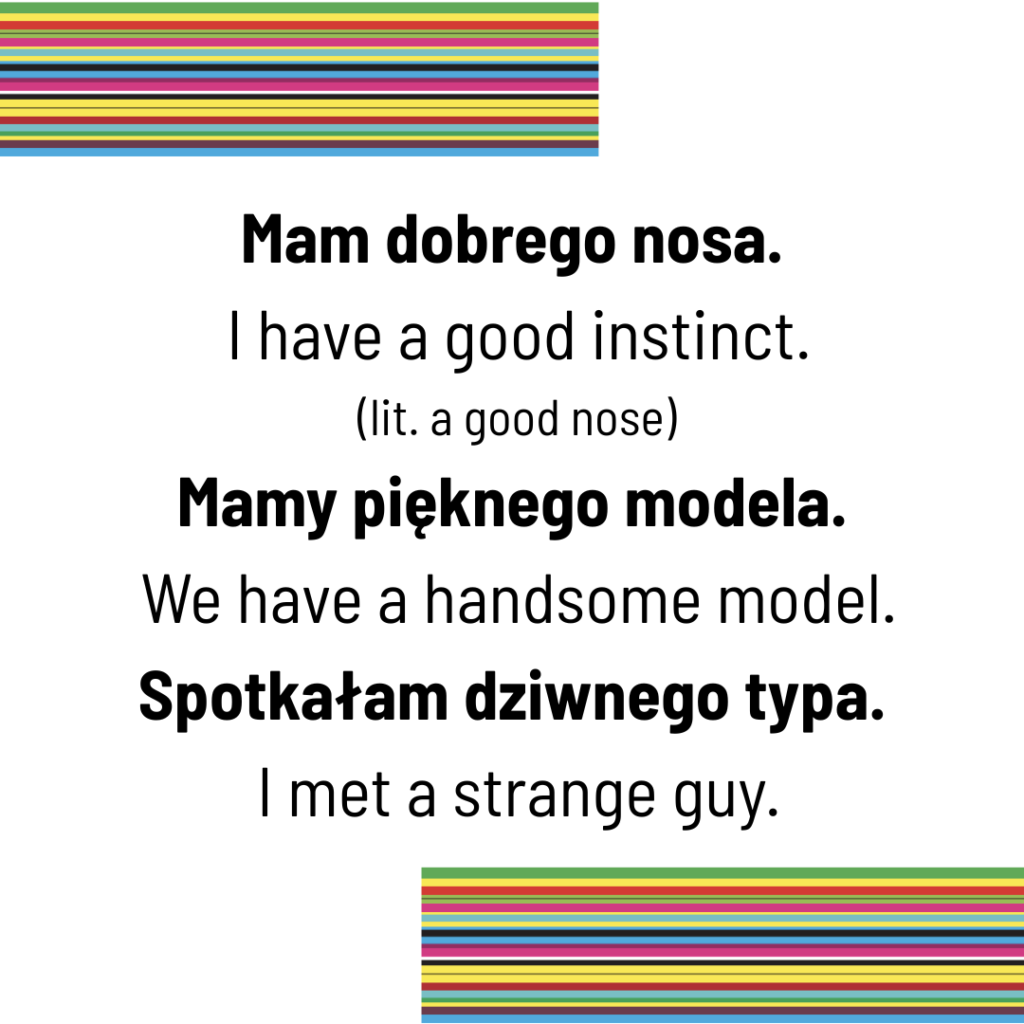
Metaphorical masculine animate
So we can tell the difference between speaking literally and speaking metaphorically — not explaining things as if to a cow on a fence.
Mam dobrego nosa.
I have a good instinct.
(lit. a good nose)
Mamy pięknego modela.
We have a handsome model.
Spotkałam dziwnego typa.
I met a strange guy.
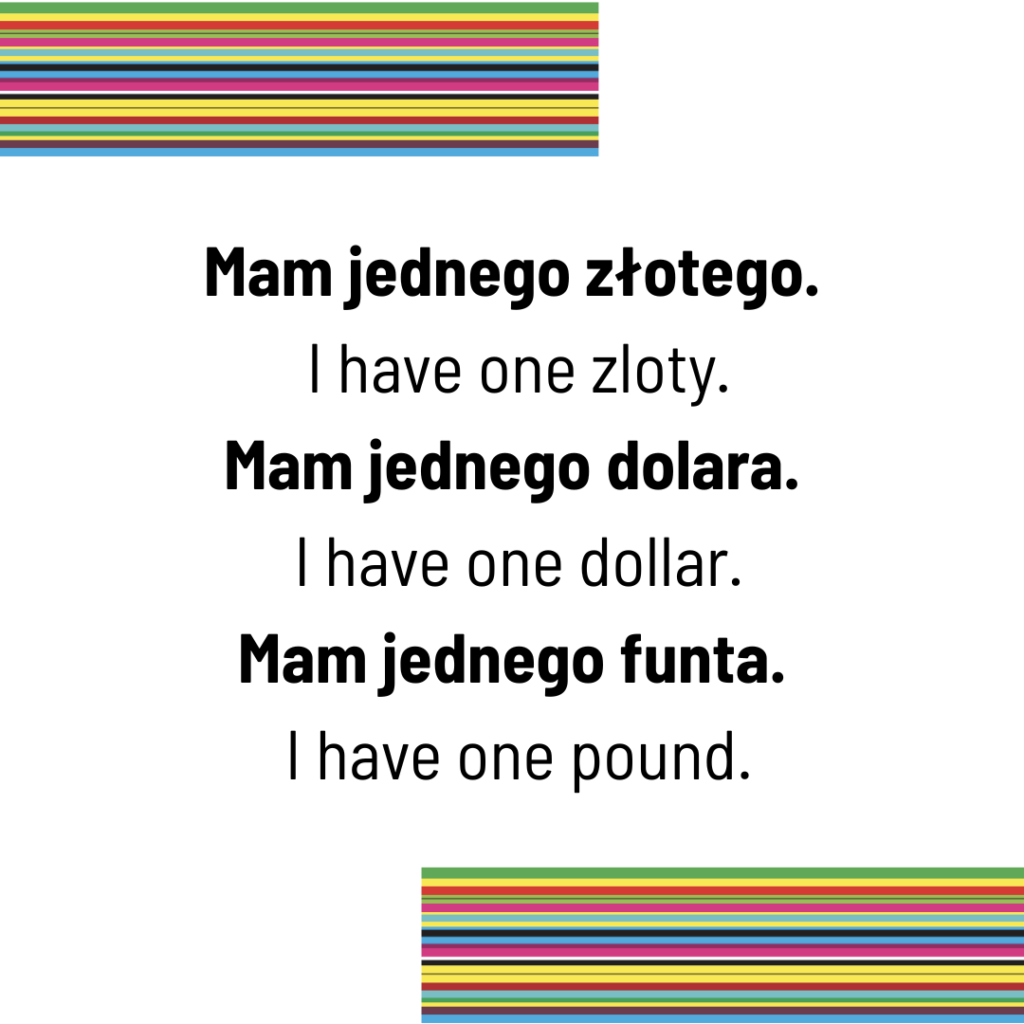
Currency-related masculine animate
Obviously — money is alive. At least in Polish.
Mam jednego złotego.
I have one zloty.
Mam jednego dolara.
I have one dollar.
Mam jednego funta.
I have one pound.
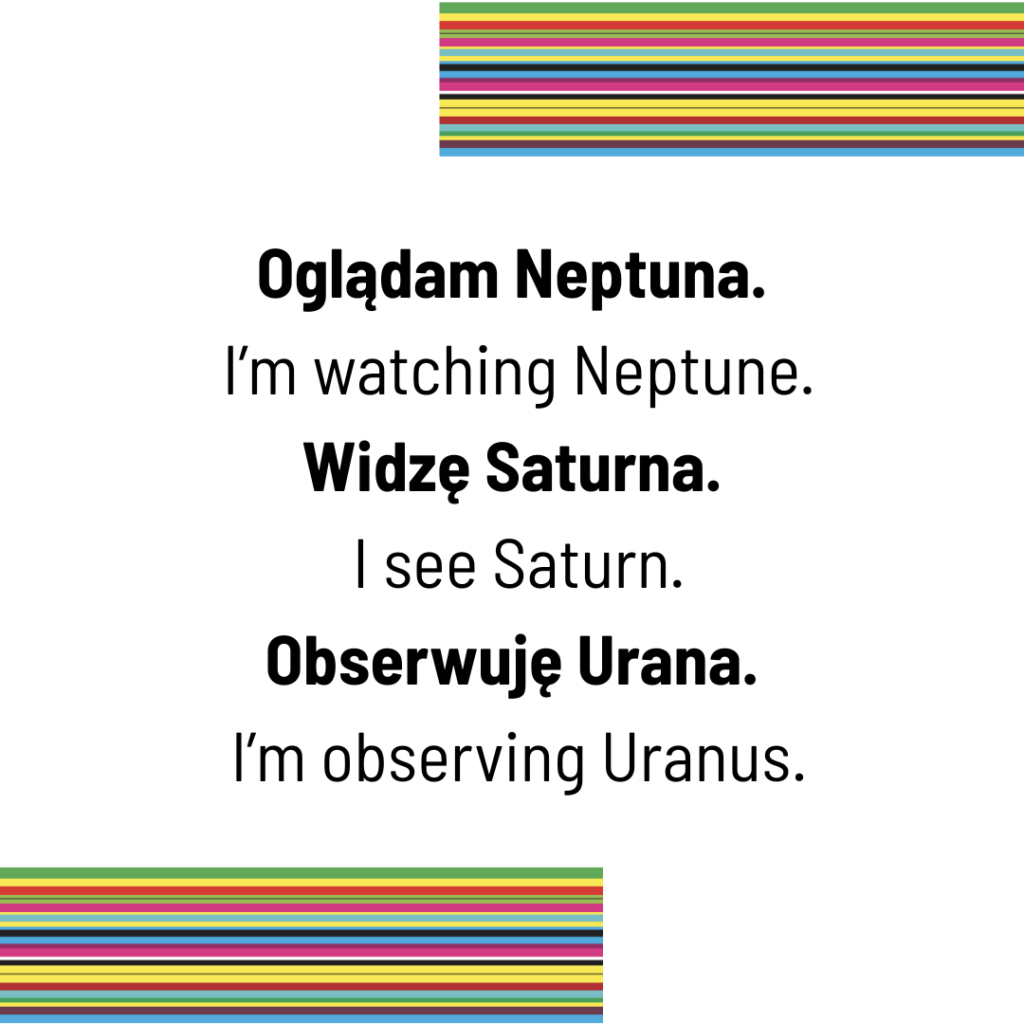
Cosmic masculine animate
Mysterious planets and unreachable worlds — grammar goes full sci-fi here.
Oglądam Neptuna.
I’m watching Neptune.
Widzę Saturna.
I see Saturn.
Obserwuję Urana.
I’m observing Uranus.
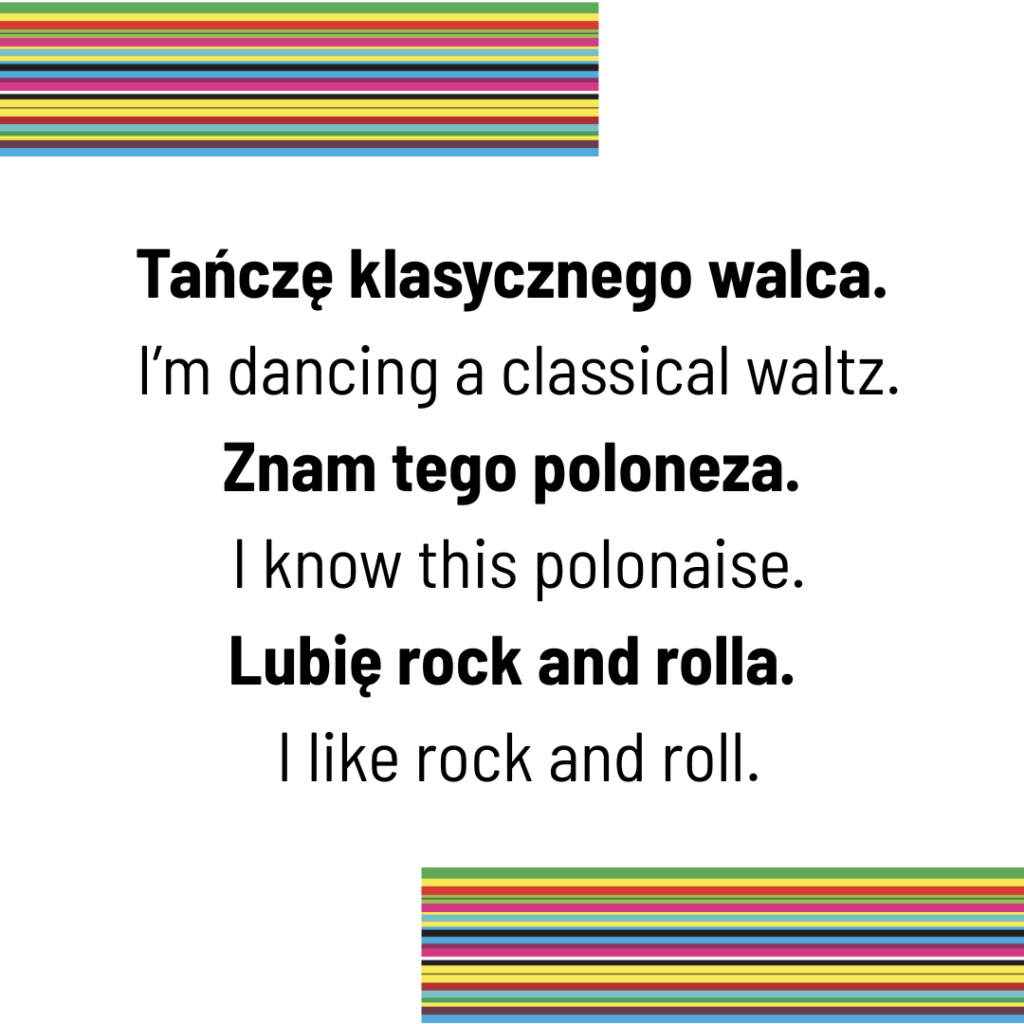
Dance-related masculine animate
This one probably has something to do with endorphins, because I see no other explanation.
Tańczę klasycznego walca.
I’m dancing a classical waltz.
Znam tego poloneza.
I know this polonaise.
Lubię rock and rolla.
I like rock and roll.
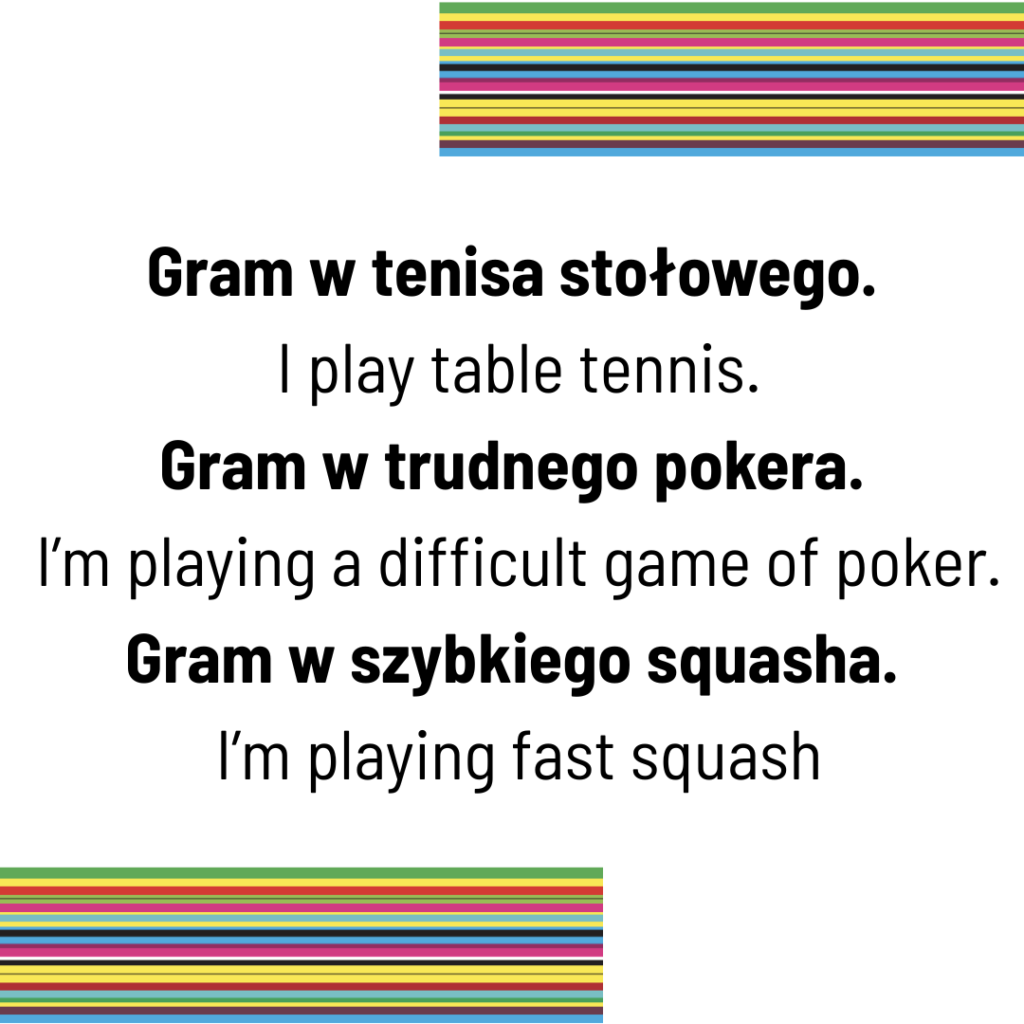
Game-related masculine animate
Games and game figures — whoever wins gets -ego / -a.
Gram w tenisa stołowego.
I play table tennis.
Gram w trudnego pokera.
I’m playing a difficult game of poker.
Gram w szybkiego squasha.
I’m playing fast squash.
So yes — it’s pretty clear that the category of animacy is no longer very helpful if we’re just trying to figure out when Polish uses -ego / -a in the masculine accusative. Instead, it’s worth remembering these situations and contexts — and remembering that thanks to this grammatical quirk, Polish lets us add shades of meaning: closeness, concreteness, emotional involvement, or a touch of metaphor.
Because in Polish grammar, even a watermelon can feel alive. 🍉
We know that grammatical form very often tells us how we think about something, rather than what it objectively is.