How to prepare for a job interview in Polish
26 March 2026
Learning Polish in Warsaw – why is it worth it?
16 April 2026
Teaching Polish to foreigners, I hear a lot of complaints about Polish grammar — especially the cases, meaning the declension of nouns, adjectives, and pronouns.
Some people genuinely hate it and rant like medieval poets cursing fate, swearing there’s zero logic. Some pretend it doesn’t exist (a bold strategy, rarely successful). Some only decide to study it seriously once there’s already a dramatic chasm between their vocabulary and grammar. Others, while learning declensions, enter a mystical grammatical trance and temporarily leave planet Earth. There are also the mathematically minded ones, who treat it like the world’s best puzzle. And finally, there are those who ask the big question. Philosophically.
What’s the point of all this?
That’s when good stories save the day.
The first story is about giving. About giving in the dative case.
When my daughter was little — maybe three or four — she was sitting on the floor by the balcony in our apartment, carefully planning presents for the whole family like a tiny logistics manager. She had prepared precious little gifts and wanted to give one to everyone. Suddenly I heard her say:
ENG / “I’ll give this to Grandpa Piotrek, I’ll give this to Grandpa Szczepan, I’ll give this to Uncle Adam, I’ll give this to Uncle Tomek.”
PL / „To dam dziadkowi Piotrkowi, to dam dziadkowi Szczepanowi, to dam wujkowi Adamowi, to dam wujkowi Tomkowi.”
This is a perfect example of what the dative case is all about.
Giving to someone.
You can give people presents (to give), but you can also give them words (to say), good wishes (to wish), good advice (to advise), recommendations (to recommend), your car or money (to lend), or even an apartment (to rent). Generous, right?
To the question “to whom?” all of this can be given — the dative case has the answer.
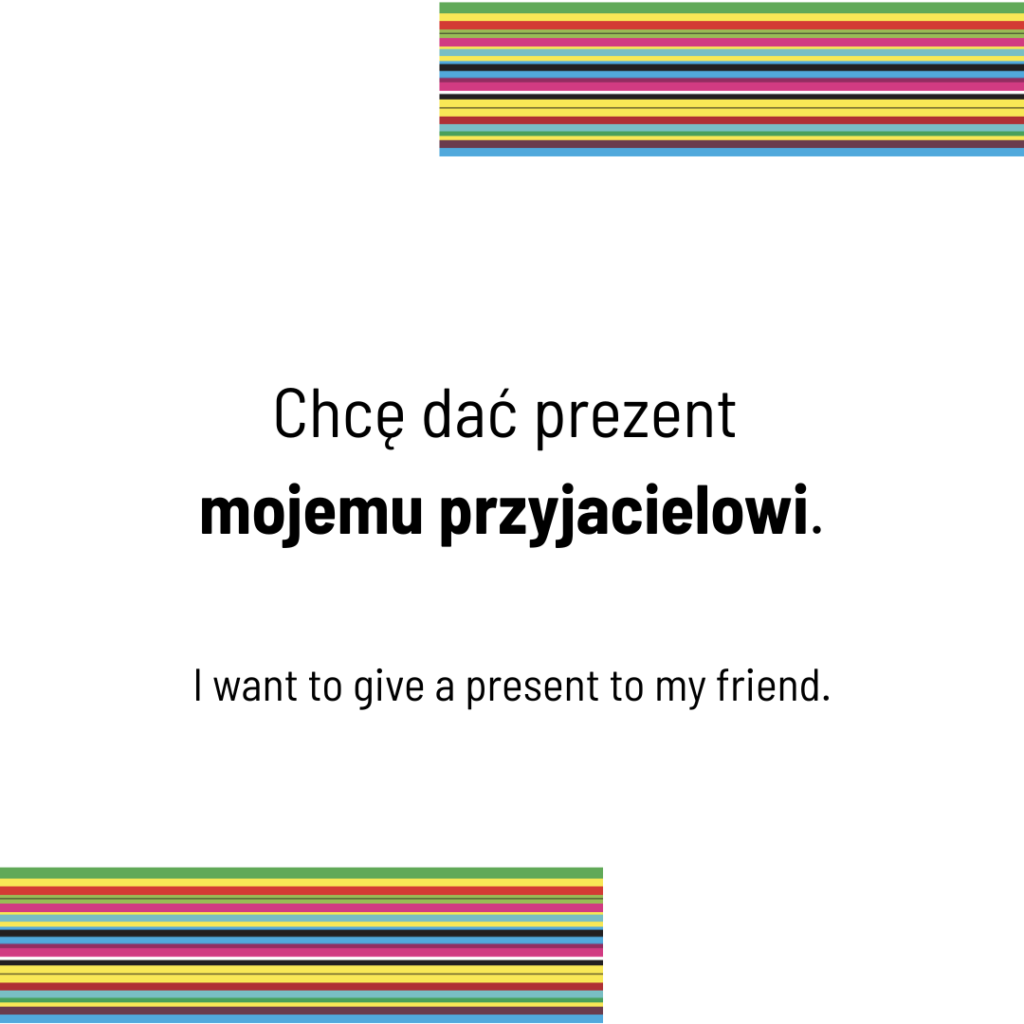
I want to give a present to my friend.
Chcę dać prezent mojemu przyjacielowi.
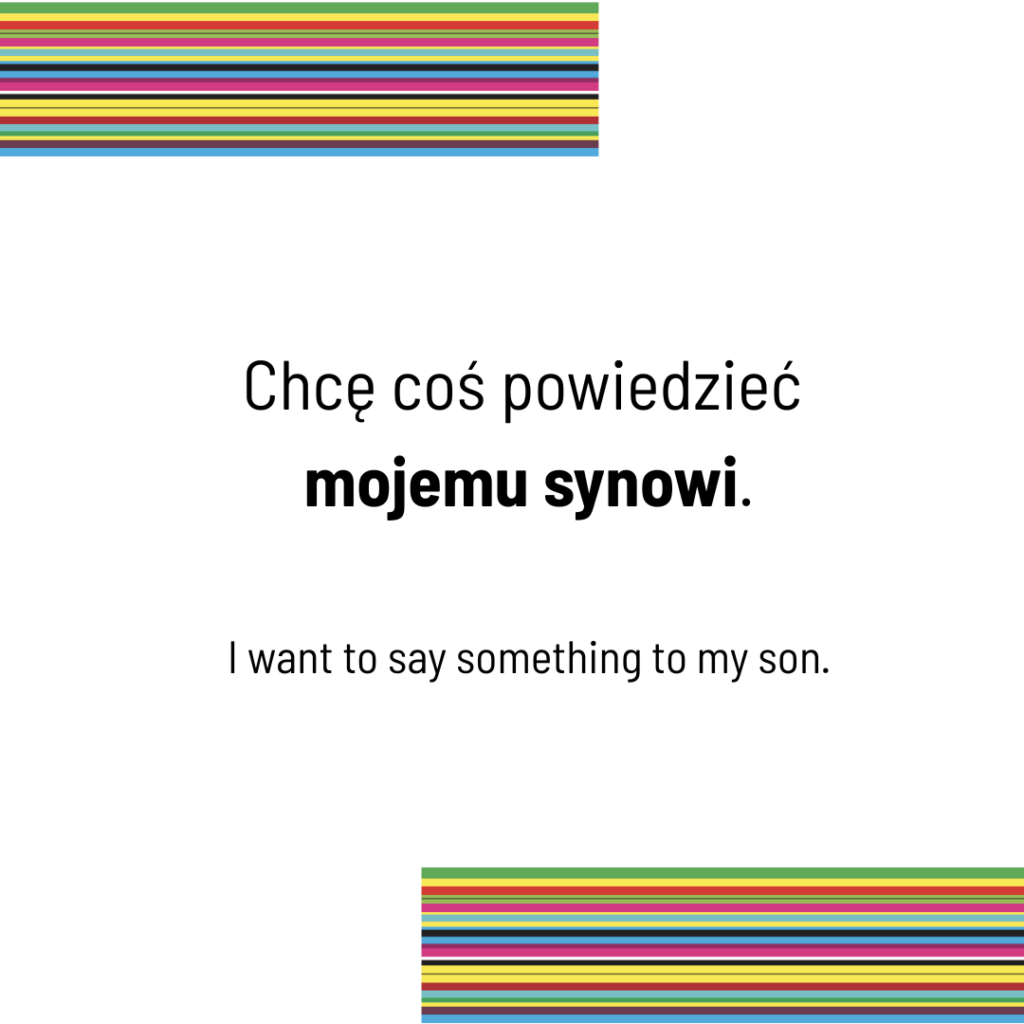
I want to say something to my son.
Chcę coś powiedzieć mojemu synowi.
I wish my professor all the best.
Życzę wszystkiego najlepszego mojemu profesorowi.
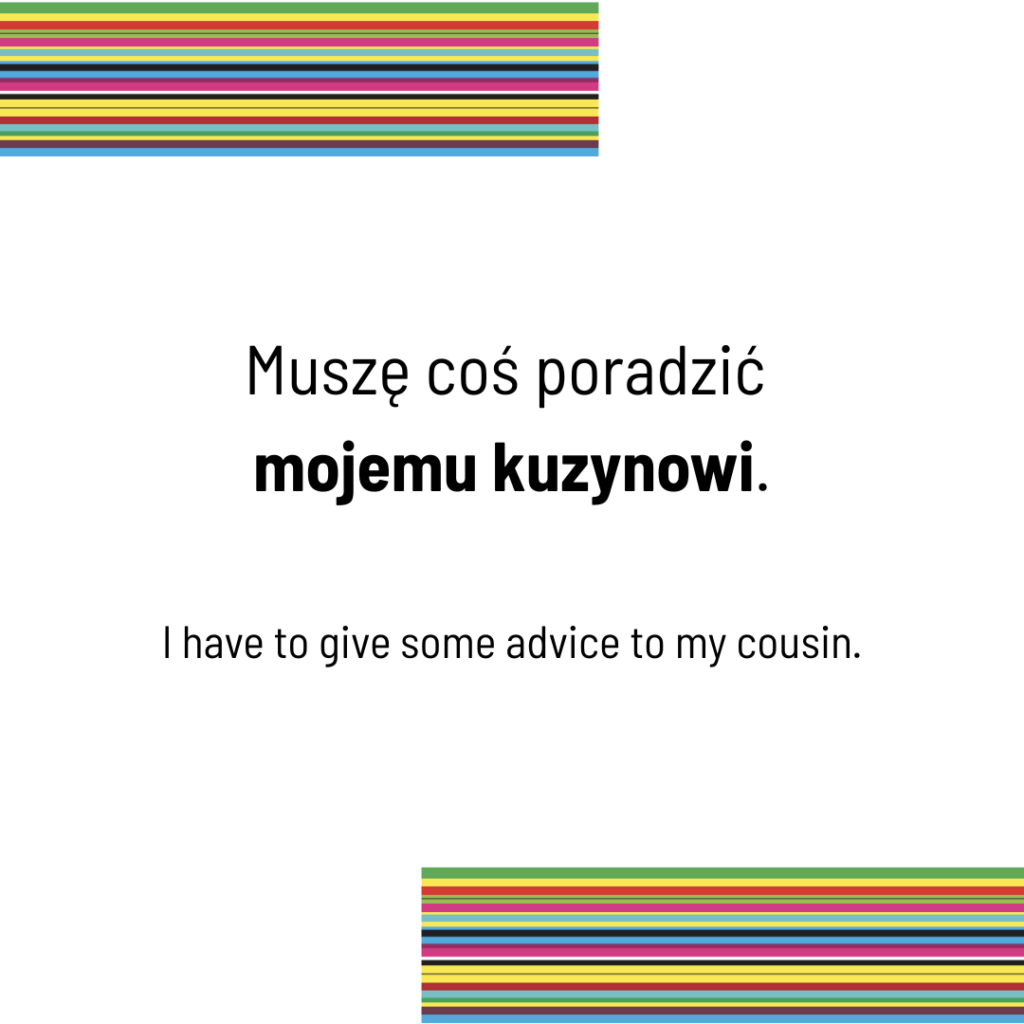
I have to give some advice to my cousin.
Muszę coś poradzić mojemu kuzynowi.
I want to recommend this movie to my teacher.
Chcę polecić ten film mojej nauczycielce.
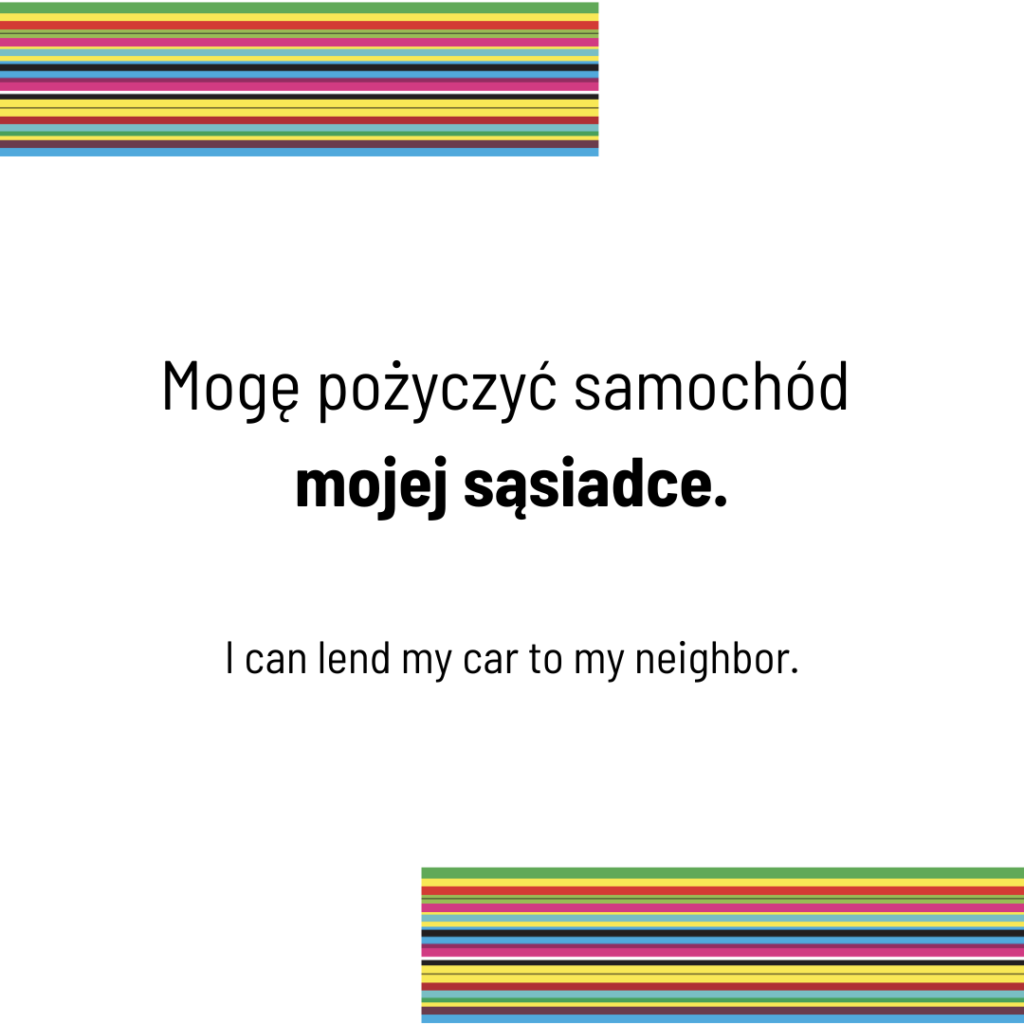
I can lend my car to my neighbor — or my friend, if I’m feeling brave.
Mogę pożyczyć samochód mojej sąsiadce mojej przyjaciółce.
I will lend money to my sister.
Pożyczę pieniądze mojej siostrze.
I will rent an apartment to my cousin.
Wynajmę mieszkanie mojej kuzynce.
And you? To whom will you give the best things you have? 😄